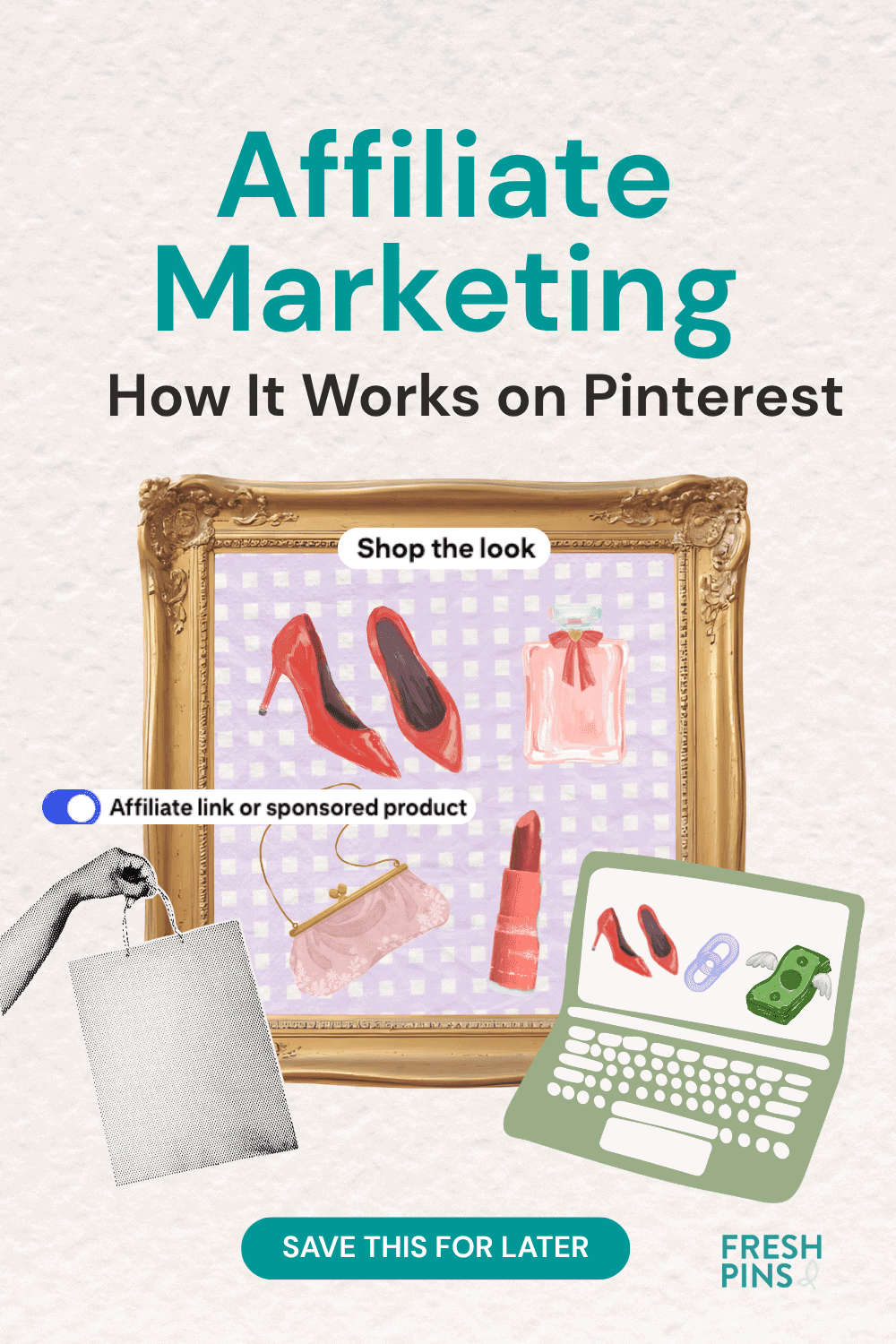

How to Tag Products, Disclose Partnerships, and Actually Make Money
Pinterest is one of the best platforms for affiliate marketing that most creators are still underusing. The reason is that people come to Pinterest to plan and to buy. They’re not scrolling mindlessly. They’re searching for a couch, a skincare routine, a holiday gift list, and a recipe for a dinner party next week. That search intent is worth a lot, and with the right setup, your pins can be part of that purchasing journey.
This post covers everything you need to know about making affiliate marketing work on Pinterest: which programs are approved, how to tag products, how to disclose your partnerships, and how to think about curation as a real monetization strategy.
The Difference Between Organic Content and Affiliate Content
When we talk about organic content on Pinterest, we’re talking about evergreen, seasonal, and trend-driven pins that build discovery and trust over time. That’s your content strategy.
Affiliate content is the monetization layer you weave into that strategy.
The two work together. You build an audience by consistently creating useful, beautiful, searchable content. You monetize that audience by linking to products through affiliate programs, products your audience is already looking for.
The mistake most creators make is treating these as separate activities: “this week I’ll do affiliate stuff, next week regular content.” In practice, the best-performing Pinterest accounts blend them seamlessly. An outfit styling pin that links to affiliate products is still a useful, beautiful pin. A gift guide collage with affiliate tags is still a discovery pin. The affiliate layer doesn’t have to feel promotional — it just has to be honest.
Which Affiliate Programs Does Pinterest Actually Approve?
Pinterest has four officially approved affiliate partners:
- Amazon Associates
- Rakuten
- ShopStyle
- LTK (LikeToKnow.it)
These are the programs where affiliate links are fully integrated and tracked natively within the platform. Other affiliate links may work — and many creators use them successfully — but these four are where Pinterest’s support and reliability are strongest. If you’re getting errors when tagging products with outside links, switching to one of these programs (especially Amazon Associates) usually resolves the issue.
That said, the landscape does change. If you’re already using a program outside this list, it’s worth testing whether your links are tracking correctly rather than assuming they are.
How to Tag Products on a Pin
Product tagging is how you turn a regular pin into a shoppable one. When done correctly, viewers can find directly next to your pin all the products you tagged. No hunting through bio links, no searching separately.
Here’s the process:
Create a New Pin
When creating a new pin, after uploading your image or video, look for the “Tag products” option in the creation flow. You can search for products directly using keywords or paste a product URL. Pinterest will pull in the product image, price, and name.
Using affiliate links with product tags: you don’t have to choose one or the other. You can use your affiliate link as the tagged product URL, which means viewers click through to the product page and your tracking cookie fires. Product tag plus affiliate commission in one step.
Tagging products on your Pinterest Collages.
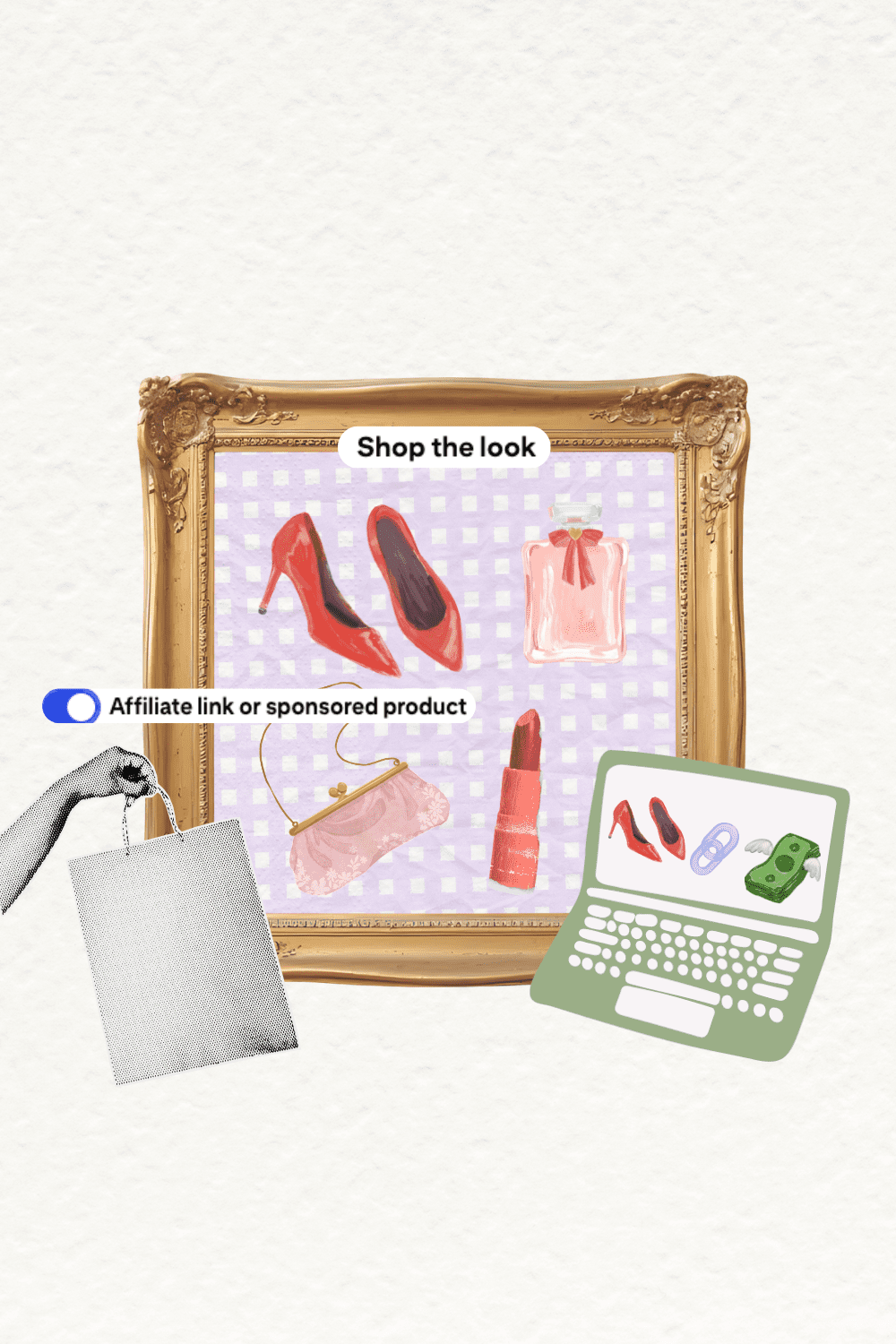
Affiliate links embedded in individual cutout pins carry their tracking information even when those cutouts are rearranged into a collage. This is one of the most powerful features for affiliate creators: you can build a multi-product pin and have every product link tracked independently.
What to consider when you tag products on your pins
Avoid hard-coding prices in your images. If you put “$49.99” in your text overlay and the product goes on sale or the price changes, your pin becomes inaccurate. It also can’t update itself. Phrases like “under $50” or “budget-friendly pick” stay accurate indefinitely. Better still, use product tags: they pull live price data from the merchant’s catalog and update automatically.
How to Tag Products on Existing Pins
If you have older pins that are already performing well (getting saves, generating impressions) those are prime candidates for adding product tags.
Go to the pin, click the pencil icon, and look for the product tagging option. Not every pin type supports editing after publishing (video pins, for example, have some restrictions), but static image pins generally can be tagged retroactively.
We’ll talk more about why this matters in the Amazon post I’m crafting later today, but the short version: a pin can live for over a year and keep driving traffic. If the product it was linking to has sold out, that traffic is wasted. Regularly auditing your top-performing pins and updating the tagged products keeps your earning potential alive.
How to Disclose a Partnership
Disclosure is not optional. Audiences who trust you are more valuable than audiences who feel misled.
How to Disclose an Affiliate Link on Pinterest:
Pinterest recommends adding #affiliatelink or #ad in your pin description at a minimum. Most affiliate programs have their own disclosure requirements too. Amazon Associates, for example, requires a specific disclosure statement near the affiliate link. Always check the terms of your specific program.
How to Disclose an Brand Partnership on Pinterest:
Pinterest has a built-in Paid Partnership tool. Before you publish a sponsored pin, go to Advanced Settings and toggle on the paid partnership label. You’ll tag your brand partner. Once they approve the request, the “Paid Partnership with [Brand]” label appears on your pin.
One important note: activate the paid partnership label before publishing. If you publish first and try to add it later, you’ll need to re-upload the pin entirely. The paid partnership tool also makes your pin eligible for the brand to promote as an ad — which means their budget is amplifying your organic reach without any extra work on your part.
The paid partnership tool is currently a disclosure mechanism, not a payment system. The financial terms of any brand deal still happen off-platform, for example through contracts, invoices, and whatever arrangement you’ve made with the brand directly.
Making Money From Curated Content
Here’s something that surprises a lot of creators: you don’t have to create original content to earn affiliate income on Pinterest.
Curation, meaning saving and organizing other people’s pins alongside your own, is a legitimate and often overlooked monetization strategy. Here’s why it works:
Boards built around curated content can rank for valuable search terms.
A board called “Minimalist Bedroom Ideas Under $500” with 40 carefully selected pins — some yours, some curated — can surface in search and drive traffic to the affiliate-tagged pins you’ve added.
Curation builds your point of view.
When someone lands on your profile and sees boards that are thoughtfully assembled — not just random saves — they get a sense of your aesthetic and taste. That trust is what makes them more likely to click your affiliate links when they see them.
Active, updated boards perform better.
Pinterest data consistently shows that boards updated within the last three months have higher pin engagement. Curation is the easiest way to keep boards fresh without creating new original content every day.
The practical approach: use curation to build and refresh your boards, and weave in your affiliate-tagged original pins to create conversion opportunities within that curated context.
Three Pinterest Tools That Make Affiliate Marketing Work
Product Tags
The foundation of shoppable content. Every pin that links to a purchasable product should have a product tag. It creates a direct path from inspiration to purchase.
Collages with Affiliate Links
The most powerful format for basket-building. One pin, multiple products, each with independent tracking. Particularly effective for gift guides, outfit sets, room styling, and beauty routines.
The Paid Partnership Tool
Essential for any sponsored content. It protects you legally, signals transparency to your audience, and opens the door for brands to amplify your content as an ad.
What to Share With Brands
If you’re pitching to brands or trying to attract partnerships, your affiliate data is part of your story. Outbound clicks, saves, and conversion data from affiliate programs are the metrics that tell a brand you’re driving action.
What to include in your Media Kit or in your Pitch when trying to get brand deals on Pinterest
- Your top-performing pins by saves and outbound clicks
- A board collecting your best brand-ready content
- Any affiliate earnings data you’re comfortable sharing (or conversion rates if the numbers are strong)
- Your monthly impressions, but framed alongside engagement — impressions alone don’t tell the full story
- Your Engagement Rate, it’s more important than your followers count.
Pinterest is a platform where follower count matters less than engagement and save behavior. A creator with 5,000 followers and a 4% save rate on product pins is a more interesting partner than someone with 50,000 followers and pins no one saves.
A Note on Evergreen Affiliate Strategy
The last thing to keep in mind: affiliate marketing on Pinterest is a long game.
A pin you create today can still generate clicks — and commissions — 12 to 18 months from now. That’s both the gift and the responsibility. It means the content you build now keeps working for you. It also means you need to maintain it.
Broken links, sold-out products, outdated pricing — these are all things that quietly drain the value of your existing content. Build a habit of monthly audits on your top pins. Replace unavailable products. Update descriptions with current keywords. Keep your links live.
The creators who earn consistently from affiliate marketing on Pinterest aren’t the ones with the most pins. They’re the ones who built a library of good content and actually take care of it.
Keep reading about Pinterest Marketing on the Fresh Pins Creators Blog, and let us know if you have any questions. We hope you can succeed on Pinterest and we are here to make it happen!
Pin it for later!