
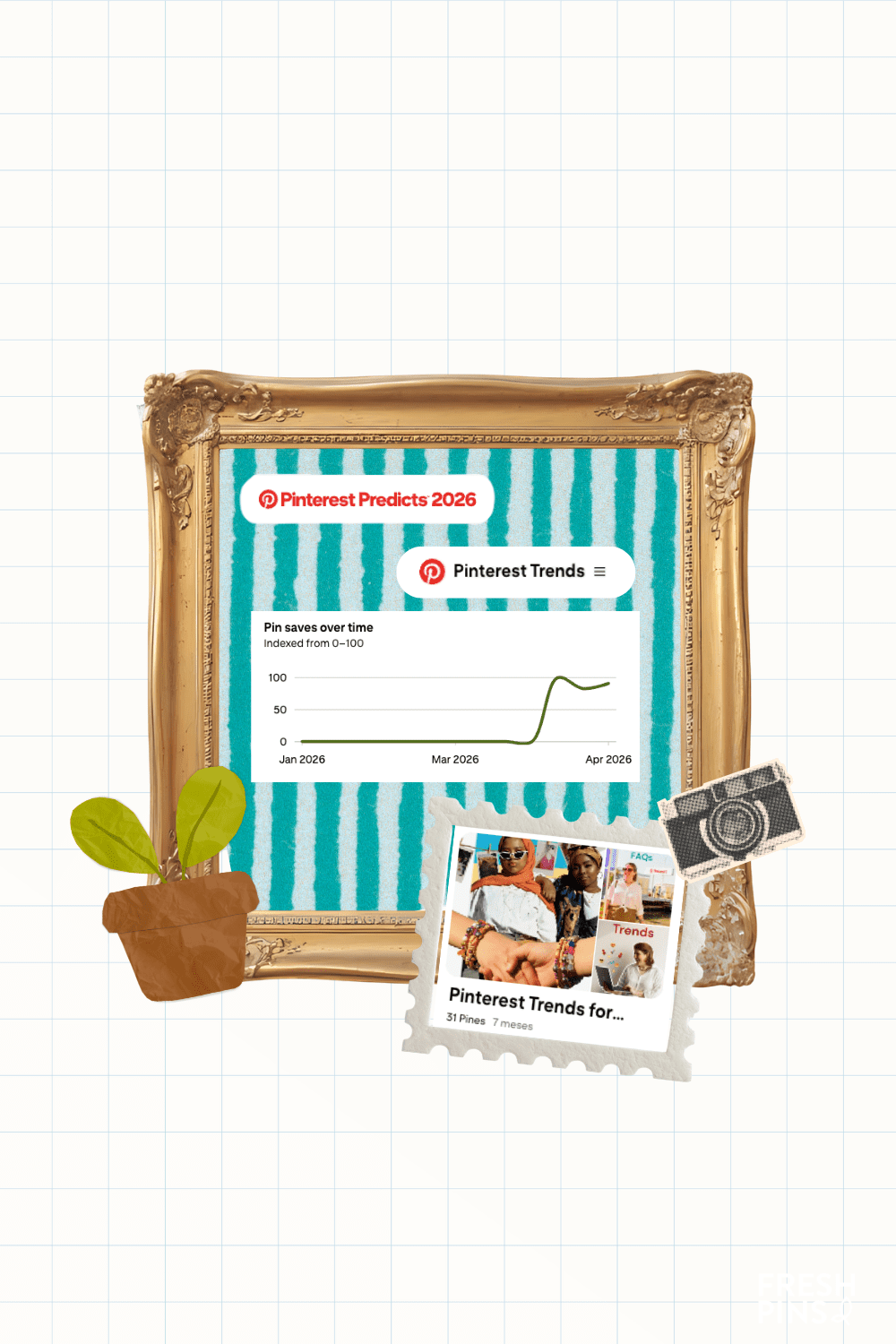

Pinterest gives you a window into what half a billion people are about to search for. Most creators never open it.
It’s called the Trends tool, and it lives inside your business account for free. Combined with Pinterest Predicts — the platform’s own annual forecast of what’s coming in culture — it’s the closest thing to a content cheat code that actually exists.
This post breaks down how both work and how to use them together.
What the Pinterest Trends Tool Is (And Isn’t)
Most creators open the Pinterest Trends tool once, poke around for five minutes, and never go back.
Which is a shame, because it’s the only free tool on the platform that tells you what your audience is going to search for before they search for it. Not what’s trending on TikTok right now. Not what went viral last week. What Pinterest users — people who are actively planning to buy, cook, decorate, travel, and style — are about to be interested in.
Pair that with Pinterest Predicts, the platform’s own annual trend forecast, and you have something most creators don’t: a content plan built on actual data instead of gut feeling.
That’s what this post is about.
Why Timing Is the Whole Game
Pinterest runs on lead time. People search for holiday content in September. Summer travel planning starts in February. Back-to-school ideas get saved in June — not August.
By the time a trend feels obvious to you, the search curve has already peaked. The creators getting consistent reach aren’t reacting to what’s trending right now. They posted 45 to 60 days ago, when the curve was just starting to rise.
The Trends tool shows you exactly that window. Search any keyword and you’ll see when interest historically starts to climb, when it peaks, and how long it holds. That’s when you want to be publishing — on the way up, not at the top.
How to Actually Use the Tool
Log into your Pinterest Business account, open the hamburger menu, and go to Analyze Performance — Pinterest Trends is right there.
Search specific keywords
Type any keyword and look at the graph over the past 24 months. Study the shape — does it spike and drop (a fad), rise gradually and hold (evergreen), or repeat at the same time every year (seasonal)? That shape tells you exactly how to treat the content.
Compare up to four keywords
Put your top niche keywords side by side and see which ones are climbing right now. Prioritize those in your next batch of pins.
Browse by category
Filter by interest, age, gender, and trend type to see what’s rising specifically among the audience you’re trying to reach — not just what’s trending globally.
Browse shopping trends
If you do affiliate marketing, this is your product research section. Drill into any category to see performance history, demographics, and related searches before you tag a single product.
Your audience’s trends
Once your account has enough engagement, Pinterest shows you what your specific followers are searching for right now. Updated daily. This is your most valuable data.
Editors’ picks
Pinterest’s own analysts curate emerging trends here — useful for sensing cultural direction before the search volume catches up.
The Pinterest Predicts Report: Pinterest’s Own Forecast
Once a year, Pinterest publishes something called Pinterest Predicts — a report of trends they’ve identified through their data that they expect to be major cultural forces in the coming year. For 2026, they’ve published 21 trends.
This is not Instagram’s trending sounds list. This is not TikTok’s “what’s going viral today” feed.
Pinterest Predicts is built on multimodal intelligence — billions of searches cross-referenced with what people are saving, what they’re shopping, and how those behaviors are changing over time. Pinterest’s own internal data shows that 88% of the trends they’ve predicted over the past six years have come true, with measurable growth across search, saves, and shopping.
For creators, this report is a gift. It tells you, months in advance, what your audience is about to be deeply interested in.
The 2026 Pinterest Predicts Trends
Here are all 21 trends Pinterest has identified for 2026, with a brief description of each:
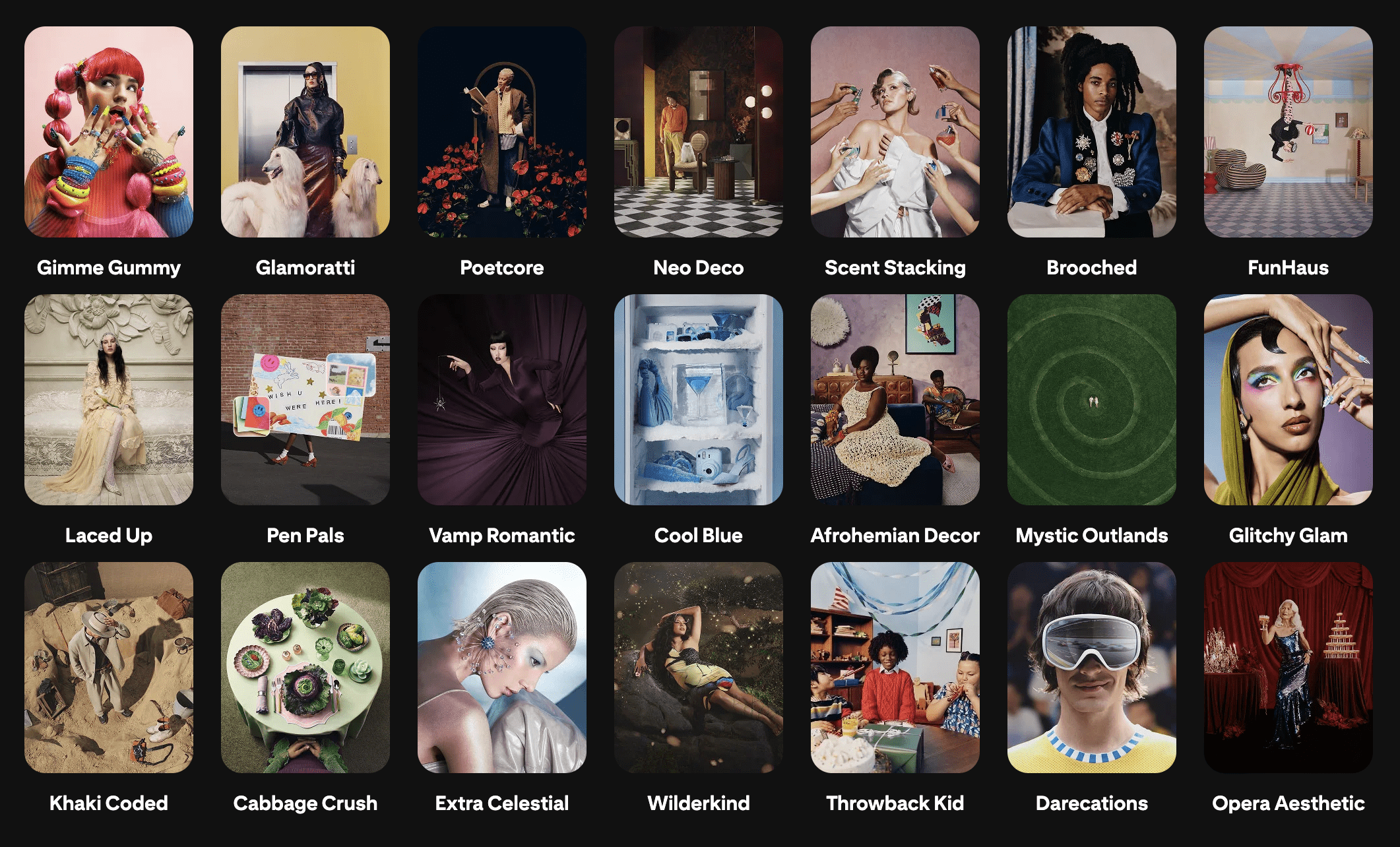
Gimme Gummy
Tactile obsession with ASMR overload. Jelly textures, translucent materials, sensory-forward design.
Glamoratti
Maximalist ’80s decadence. Power dressing, oversized silhouettes, excess as a design principle.
Poetcore
Aesthetic MFA, no student loans required. Moody, literary, old-world romanticism in fashion and interiors.
Neo Deco
Bold, glam and a touch eccentric. Art Deco-inspired architecture and interiors with a modern, slightly kitschy edge.
Opera Aesthetic
Opulent parties and decadent details. Maximalist celebration, theatrical styling, grand gestures.
Brooched
Part homage, part reinvention, all great-gran inspired. Brooches and ornamental accessories making a serious comeback
FunHaus
Elevated, with a touch of camp. Interiors that are sophisticated but irreverent, like a boutique hotel designed by someone who finds everything slightly funny.
Laced Up
Doilies on the daily. Delicate lace and crochet textiles brought into everyday wear and decor.
Pen Pals
Letter writing renaissance. Stationery, handwriting, slow communication, the physical act of correspondence.
Vamp Romantic
Haunting and heartbreaking. Dark romanticism, rich jewel tones, gothic undertones done beautifully.
Cool Blue
Subzero sophistication. Think icy blues across fashion, home, and food and beverage styling.
Afrohemian Decor
Bold, bright, and natural. A vibrant fusion of Afrocentric patterns and Bohemian interiors.
Mystic Outlands
Fairytale meets fever dream. Surreal, fantastical visual aesthetics with dark fairytale energy.
Glitchy Glam
Missing the mark, on purpose. Intentionally imperfect beauty and fashion, celebrating the “mistake” as a style choice.
Khaki Coded
Digging deep on desert details. Desert earth tones, safari aesthetics, utilitarian styling with a luxe finish.
Cabbage Crush
Live, laugh, leaf. Vegetables as aesthetic objects — produce-inspired color palettes, botanical maximalism, garden-to-table styling.
Extra Celestial
Straight out of sci-fi. Space-age aesthetics, iridescent materials, futuristic visual language.
Wilderkind
Animal aesthetic with a delicate touch. Nature-inspired textures and prints, but refined rather than rustic.
Throwback Kid
Back in (play)time. Childhood nostalgia, retro toys, primary colors, playful maximalism.
Darecations
Travel for the thrill of it. Adventure travel, off-grid destinations, experiences that test limits.
Opera Aesthetic
Opulent parties and decadent details. Maximalist celebration, theatrical styling, grand gestures.
Scent Stacking
Mix up the spritz. Layering multiple fragrances to create a personal signature scent.
How to Use Pinterest Predicts as a Creator
The instinct most creators have is to scroll through the list and look for the trends that feel most like them. That’s a starting point, but it’s not the full strategy.
Step 1: Identify the trends that have a genuine connection to your niche.
Not every trend will apply. A beauty creator probably sees clear connections to Vamp Romantic, Glitchy Glam, Scent Stacking, and possibly Gimme Gummy (tactile textures in makeup). A home creator might gravitate toward Afrohemian Decor, FunHaus, Neo Deco, or Cool Blue. A fashion creator has options across almost the entire list. Pick two or three where the connection feels real and where you can create content that genuinely fits.
Step 2: Cross-reference with the Trends tool.
Once you’ve identified which Pinterest Predicts trends are relevant to you, go to the Trends tool and search the core keywords associated with each one. Look at the current search curve. Is interest already rising? Has it not yet started? That tells you how urgently you need to start posting.
Step 3: Build trend content into your content calendar — but don’t abandon evergreen.
Pinterest Predicts trends are cultural movements, not one-week fads. Most of them grow all year long. This isn’t a rush to post one trendy pin and move on. The opportunity is to build a thread of content around the trend across multiple months — gradually, with different angles and formats, as interest builds.
Step 4: Go cross-category if you can.
One of the most interesting pieces of Pinterest’s playbook for these trends is the idea of unexpected connections. Cabbage Crush isn’t just for food creators — home decor brands can use produce-inspired color palettes. Opera Aesthetic isn’t just for fashion — travel creators can build content around opera-centered destinations. Look at your niche and ask: what’s the non-obvious way I can connect to this trend?
Step 5: Create boards around the trends you’re targeting.
A board named “Cool Blue Aesthetic” or “Vamp Romantic Interiors” builds a themed, searchable home for all your trend-related content. As more people search those trend-related terms throughout the year, your board — and the pins in it — have a better chance of surfacing.
Why This Matters: The Numbers Behind Pinterest Predicts
Pinterest’s internal data on the predictive power of these trends is not a marketing talking point — it reflects real, measurable consumer behavior:
Outbound clicks on Pinterest Predicts 2025-related content grew 65% year over year. Checkouts on Pinterest Predicts 2025-related content increased 68% year over year. These aren’t impressions or saves — they’re clicks and purchases. The people engaging with these trends aren’t window shopping; they’re buying.
For creators building affiliate content, this is the key insight: the trends Pinterest predicts tend to generate high-intent search behavior. People searching for “scent stacking routine” or “Afrohemian living room” are in planning mode. They came to Pinterest specifically to find something they intend to buy or do. Your content, if it’s well-positioned around these trends, can be part of that purchasing decision.
The Practical Workflow
Here’s how we’d put this into practice as a creator:
Monthly:
Open the Trends tool and check two or three of your core niche keywords. Note whether they’re rising, flat, or declining compared to last month. If a term is rising, increase your publishing frequency around it.
Quarterly:
Review the Pinterest Predicts list again with fresh eyes. As the year progresses, you’ll see which trends are actually gaining momentum on the platform and which ones are slower to catch on. Double down on the ones that are moving.
Before each major seasonal window:
Use the Trends tool to identify the exact timing of when your seasonal content should go live. For most categories, you want to start 45 to 60 days before peak search. The tool will show you where the curve historically starts rising — that’s your publishing start date.
When planning any new content batch:
Search the keywords for your next set of pins in the Trends tool before you open Canva. Confirm that interest is rising or at least stable, not already declining. Let the data shape which keywords go in your titles and descriptions.
The Bigger Picture
Most of the Pinterest advice circulating right now focuses on the mechanics — how many pins to post per day, which formats perform best, how to structure descriptions. That’s all useful. But the creators who see consistent, compounding growth on Pinterest are the ones who understand the platform’s fundamental nature: it’s a planning tool used by people who are already in the mindset of doing, buying, and deciding.
The Trends tool and Pinterest Predicts exist to show you what those people are about to be interested in. The only question is whether you’re going to be there with the right content when their search intent peaks — or whether you’re going to start posting after everyone else already figured it out.
The information is public. The tool is free. The window to get ahead of 2026’s trends is already open.
Use it.
Read more about Pinterest Marketing on our dedicated Fresh Pins Creators Blog. Do you want to delegate your Pinterest Marketing to the Fresh Pins Creators team? Fill out this form.